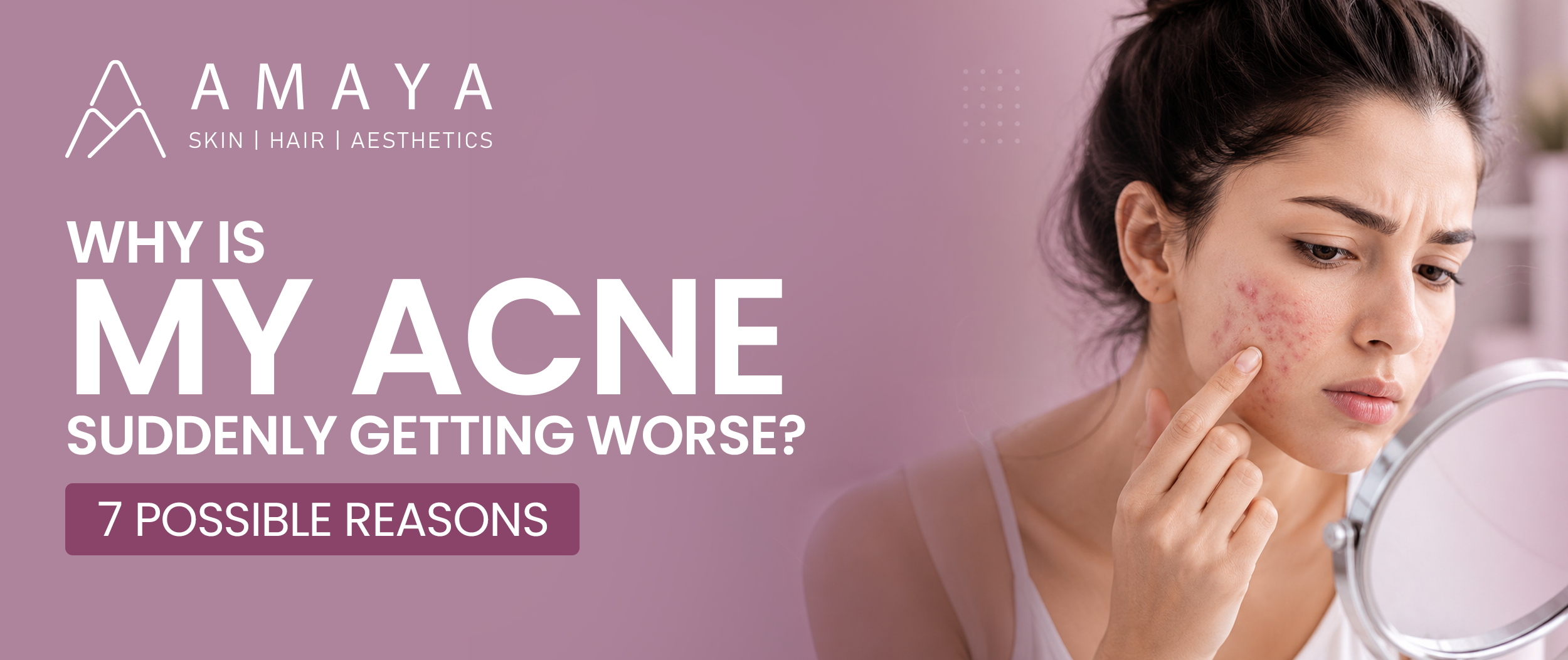
Acne can be frustrating, especially when your skin was relatively clear and suddenly starts developing more pimples, blackheads, whiteheads, or painful breakouts. While occasional acne is common, a sudden increase in breakouts may indicate a change in your hormones, lifestyle, skincare routine, or other factors affecting your skin.
Acne develops when hair follicles become clogged with oil and dead skin cells. Hormones, genetics, stress, skincare products, and other triggers can influence how frequently and severely breakouts occur.
If you are experiencing persistent or worsening acne, consulting a dermatologist can help identify the underlying cause and create an appropriate treatment plan. Dr. Shama Reddy at Amaya Clinic in Madhapur, Hyderabad, can help evaluate acne concerns and recommend personalized skin care and treatment options.
-
Hormonal Changes
One of the most common reasons acne suddenly becomes worse is hormonal fluctuation. Changes in androgen hormones can increase oil production, making pores more likely to become clogged.
Hormonal acne may become more noticeable around the menstrual cycle, during periods of significant hormonal change, or after starting or stopping certain hormonal medications. Adult acne can also appear even if you did not experience significant acne during your teenage years.
Hormonal acne often appears around the lower face, jawline, and chin, although it can occur in other areas as well.
If breakouts repeatedly appear around the same time each month, it may be useful to discuss the pattern with a dermatologist.
-
Increased Stress
Stress may not be the only cause of acne, but it can make existing acne worse. During stressful periods, changes in stress-related hormones can influence oil production and inflammation, potentially contributing to more breakouts.
Work pressure, lack of relaxation, personal stress, and major lifestyle changes can all affect your daily routine. Stress can also indirectly contribute to acne if it causes you to sleep less, skip your usual skincare routine, or make other changes to your habits.
Try to maintain regular sleep, physical activity, relaxation time, and a consistent skincare routine. If acne continues to worsen despite these changes, professional evaluation may be helpful.
-
Your Skincare Routine Has Changed
Trying several new skincare products at once can sometimes make acne worse. Heavy creams, oily products, unsuitable cosmetics, or excessive exfoliation may irritate acne-prone skin.
Look for products labelled non-comedogenic, oil-free, or won’t clog pores when choosing moisturizers, sunscreens, and cosmetics for acne-prone skin.
A simple routine with a gentle cleanser, appropriate moisturizer, sunscreen, and dermatologist-recommended acne treatment may be more beneficial than using multiple active ingredients simultaneously.
- Hair and Haircare Products May Be Triggering Breakouts
Have you noticed small bumps around your forehead, hairline, or neck? Your haircare products could be contributing to them.
Oily shampoos, conditioners, styling products, oils, and other hair products can come into contact with the skin and potentially clog pores. The American Academy of Dermatology notes that this can cause tiny bumps and whiteheads, particularly around the hairline and forehead.
If your acne started after changing your shampoo, conditioner, hair oil, or styling product, consider whether the new product could be contributing to the problem.
Keeping hair away from your face and choosing suitable, non-comedogenic products may help reduce product-related breakouts.
- Poor Sleep and Lifestyle Changes
Your daily routine can also affect your skin. Reduced sleep, increased stress, changes in exercise, and inconsistent skincare habits may coincide with acne flare-ups.
The relationship between lifestyle and acne is complex, and there is no single lifestyle change that works for everyone. However, maintaining healthy habits can support overall skin health.
Try to:
- Maintain a regular sleep schedule.
- Keep your face clean without excessive washing.
- Remove makeup before going to bed.
- Avoid repeatedly touching or picking your face.
- Clean items that regularly contact your face, such as pillowcases and mobile phones.
- Follow a consistent skincare routine.
Small changes can make a difference when combined with appropriate acne treatment.
-
Certain Foods May Be Contributing
Diet does not affect acne in exactly the same way for everyone. However, research suggests that certain foods may worsen acne in some people.
Instead of eliminating large numbers of foods unnecessarily, pay attention to whether your breakouts consistently appear after particular dietary changes.
Keeping a simple food and skin diary can sometimes help you and your dermatologist identify possible patterns. A balanced diet that includes vegetables, fruits, whole grains, adequate protein, and sufficient water is generally a good foundation for overall health.
If you suspect a specific food is triggering your acne, discuss it with a healthcare professional before making major dietary restrictions.
-
An Underlying Hormonal or Medical Issue May Be Involved
Sometimes sudden or persistent acne may be associated with an underlying hormonal or medical issue. This is particularly important when acne appears together with other changes such as irregular menstrual cycles, increased facial hair, significant hair loss, or other hormonal symptoms.
Not every breakout means there is an underlying medical condition. However, persistent, severe, or unusual acne deserves professional evaluation rather than self-treatment.
A dermatologist can examine your skin, understand your medical and skincare history, and determine whether further evaluation is appropriate.
What Should You Do If Your Acne Is Suddenly Getting Worse?
The first step is to avoid panic and resist the temptation to use several acne products simultaneously. Over-treating the skin can cause irritation and potentially make breakouts more difficult to manage.
Start by reviewing what has changed recently:
- Did you start a new skincare product?
- Did you change your haircare products?
- Are you experiencing increased stress?
- Has your sleep schedule changed?
- Are breakouts occurring around your menstrual cycle?
- Have you started or stopped any medication?
- Are you noticing painful or deep pimples?
- Are acne marks or scars developing?
These details can help a dermatologist understand possible triggers.
If acne is persistent, painful, spreading, leaving scars, or affecting your confidence, professional treatment is recommended. Dermatologists can help control active breakouts and reduce the risk of long-term acne scarring.
Acne Treatment in Hyderabad and Madhapur
If you are looking for acne treatment in Hyderabad or a dermatologist in Madhapur, getting an accurate diagnosis is an important first step.
Dr. Shama Reddy at Amaya Clinic, Madhapur, Hyderabad, can assess your acne, identify possible triggers, and recommend treatment based on your skin type and severity of acne.
Treatment may vary from person to person. Depending on the condition, a dermatologist may recommend topical treatments, prescription medicines, lifestyle modifications, procedures, or a combination of approaches.
It is important not to compare your treatment with someone else’s acne routine because acne can have different causes and severity levels.
When Should You See a Dermatologist?
Consider consulting a dermatologist if:
- Your acne suddenly becomes much worse.
- You develop painful or deep pimples.
- Breakouts are leaving dark marks or scars.
- Over-the-counter products are not helping.
- Acne continues for several weeks or months.
- You suspect hormonal changes are involved.
- Acne is affecting your confidence or daily life.
Early professional guidance can help prevent acne from becoming more severe and reduce the risk of permanent scarring.
Final Thoughts
Suddenly worsening acne can happen for many reasons, including hormonal fluctuations, stress, skincare products, haircare products, lifestyle changes, and individual dietary triggers. Finding the specific reason is more useful than simply treating every breakout with stronger products.
Maintaining a gentle and consistent skincare routine, avoiding pore-clogging products, managing stress, and paying attention to changes in your skin can help. If your acne is persistent or becoming more severe, consult a dermatologist for personalized advice.
For people looking for acne treatment in Madhapur or a skin specialist in Hyderabad, Dr. Shama Reddy at Amaya Clinic can provide professional evaluation and guidance for acne and other skin concerns.
Visit Dr. Shama Reddy at Amaya Clinics for acne treatment. Call +91 95757 96767 to book your appointment.
Leave a Reply