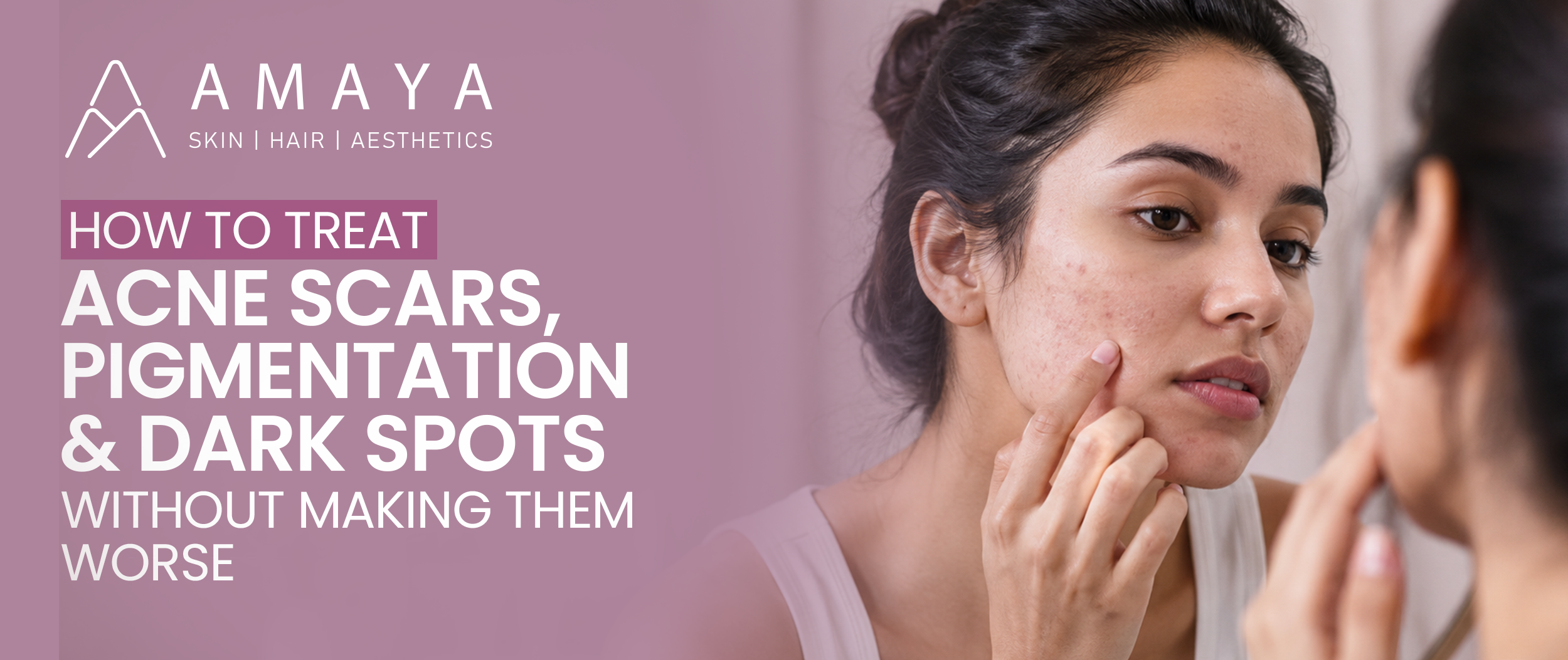
Acne may eventually clear, but the marks it leaves behind can sometimes remain for months or even longer. Dark spots, pigmentation, uneven skin tone, and acne scars are common concerns, especially when pimples are picked, squeezed, or treated with harsh skincare products.
The good news is that with the right skincare routine, consistent sun protection, and professional dermatological guidance when needed, acne scars, pigmentation, and dark spots can be managed safely.
The most important thing to remember is that more products do not always mean faster results. Using too many active ingredients or aggressive treatments can irritate the skin and may make pigmentation more noticeable.
What Is the Difference Between Acne Marks and Acne Scars?
Not every mark left after acne is an actual scar.
Flat brown or dark marks that appear after a pimple heals are often related to post-acne pigmentation or post-inflammatory hyperpigmentation (PIH). These marks may gradually fade with time, but sun exposure and repeated acne breakouts can make them appear darker.
Acne scars are different because they involve a change in the texture of the skin. They may appear as depressions, pits, uneven areas, or raised scars.
Common types of depressed acne scars include:
· Ice-pick scars
· Boxcar scars
· Rolling scars
Understanding whether you have pigmentation, redness, or true acne scarring is important because each concern may require a different treatment approach.
1. Control Active Acne First
One of the most important steps in preventing acne scars and dark spots is controlling active acne.
Every new inflammatory pimple can potentially leave behind another mark. Therefore, treating existing pigmentation while new acne continues to develop may not give the desired results.
Avoid picking, squeezing, or repeatedly touching pimples. These habits can increase inflammation and may increase the risk of pigmentation and scarring.
Depending on your skin type and acne severity, a dermatologist may recommend suitable acne treatments and skincare ingredients.
The goal is not only to treat the existing acne but also to prevent new breakouts and reduce the chances of future acne marks.
2. Never Skip Sunscreen
Daily sunscreen is one of the most important parts of managing pigmentation and dark spots.
Sun exposure can make existing pigmentation appear darker and can make uneven skin tone more noticeable. Even if you are following a good pigmentation treatment, inadequate sun protection can affect your progress.
Choose a broad-spectrum sunscreen with SPF 30 or higher and make it part of your everyday skincare routine.
Sunscreen should not be limited to holidays or days when you spend a lot of time outdoors. Regular daytime exposure during commuting, walking, shopping, or other outdoor activities can also contribute to pigmentation.
If you are prone to pigmentation, consistent sun protection becomes especially important.
3. Introduce Active Skincare Ingredients Slowly
A common mistake is using several active ingredients at the same time because you want faster results.
Ingredients such as retinoids, azelaic acid, niacinamide, and exfoliating acids may be useful for certain acne and pigmentation concerns. However, not every ingredient is suitable for every skin type.
Using too many active ingredients simultaneously may cause:
· Dryness
· Redness
· Burning
· Peeling
· Skin sensitivity
· Irritation
When the skin becomes irritated, pigmentation can sometimes become more noticeable.
Instead of changing your entire skincare routine at once, introduce new products gradually. If you have sensitive or pigmentation-prone skin, professional guidance can help you select suitable ingredients.
4. Choose the Right Ingredients for Pigmentation
Pigmentation can have different causes and levels of severity, so there is no single product that works for everyone.
Depending on your skin condition, a dermatologist may recommend ingredients such as:
· Azelaic acid
· Niacinamide
· Retinoids
· Tranexamic acid
· Kojic acid
· Other pigmentation-targeting ingredients
Some pigmentation concerns may require stronger treatments. However, these should ideally be used under professional guidance.
Avoid randomly using strong fairness creams or unknown pigmentation products recommended through social media or unverified sources. A product that temporarily makes the skin look brighter may not necessarily be suitable for long-term skin health.
5. Avoid Harsh Scrubs and DIY Remedies
When people notice dark spots, they often try aggressive scrubbing because they believe it will remove the pigmentation faster.
However, excessive scrubbing can irritate the skin and damage the skin barrier.
Similarly, applying irritating home remedies such as lemon juice, baking soda, or other harsh ingredients directly to the face can cause unwanted irritation.
Instead of trying to remove pigmentation aggressively, focus on maintaining a healthy skin barrier.
A simple routine consisting of:
Gentle cleanser + moisturizer + suitable treatment + sunscreen
can provide a better foundation for healthy-looking skin.
6. Acne Scars Need Scar-Specific Treatment
True acne scars may not respond sufficiently to skincare creams alone.
Depending on the type and severity of the scars, a dermatologist may consider treatments such as:
· Microneedling
· Chemical peels
· Laser treatments
· Subcision
· Dermal fillers
· Combination treatments
For example, certain types of depressed acne scars may benefit from treatments designed to stimulate collagen and improve skin texture.
However, there is no single acne scar treatment that is ideal for everyone.
Treatment selection may depend on:
· Type of acne scar
· Scar depth
· Skin type
· Skin tone
· Active acne
· Pigmentation tendency
· Overall skin condition
This is why acne scar procedures should ideally be performed under the guidance of a qualified and experienced dermatologist.
7. Be Patient With Pigmentation Treatment
Pigmentation does not usually disappear overnight.
One of the most common skincare mistakes is changing products too frequently because results are not immediately visible. Constantly changing treatments can increase the risk of irritation and make it difficult to understand which product is actually helping your skin.
Consistency is key.
Follow a suitable skincare routine regularly, use sunscreen, control active acne, and give your skin sufficient time to respond.
If you are undergoing an in-clinic acne scar or pigmentation procedure, follow the recommended aftercare routine carefully.
When Should You See a Dermatologist?
Consider consulting a dermatologist if:
· Acne keeps coming back.
· Dark spots continue to increase.
· You have deep or painful acne.
· You have indented or raised acne scars.
· Pigmentation has remained for a long time.
· Your skin burns or becomes irritated after using skincare products.
· Over-the-counter products have not helped.
· Acne scars are affecting your skin texture or confidence.
A dermatologist can evaluate whether you are primarily dealing with active acne, post-acne pigmentation, redness, or structural acne scars and recommend an appropriate treatment approach.
Personalized Acne, Pigmentation and Scar Care at Amaya Clinic
If you are concerned about acne, acne scars, pigmentation, or dark spots, you can consult Dr. Shama Reddy at Amaya Clinic for personalized dermatological care.
Every person’s skin is different. Skin type, acne severity, pigmentation pattern, scar type, and sensitivity can all influence the choice of treatment.
Rather than following a one-size-fits-all skincare routine, a personalized approach can help determine whether you need skincare management, acne treatment, pigmentation care, or an in-clinic procedure.
Dr. Shama Reddy at Amaya Clinic can assess your individual skin concerns and guide you toward suitable treatment options based on your needs.
The goal is not simply to make the skin look brighter temporarily, but to manage the underlying skin concern while maintaining healthy skin.
Simple Tips to Prevent New Acne Marks and Scars
Along with professional treatment and skincare, a few simple habits can help reduce the risk of new acne marks:
· Do not squeeze or pick pimples.
· Avoid aggressive face scrubbing.
· Use sunscreen every day.
· Keep your skin moisturized.
· Do not introduce multiple active ingredients at once.
· Avoid unverified fairness creams.
· Be cautious with DIY remedies.
· Treat active acne instead of ignoring recurring breakouts.
· Follow professional advice after acne scar procedures.
· Be consistent with your skincare routine.
Final Thoughts
Treating acne scars, pigmentation, and dark spots requires patience, consistency, and the right treatment approach.
Start by controlling active acne, avoid picking pimples, protect your skin from the sun, and introduce active skincare ingredients gradually.
Avoid harsh scrubs, excessive exfoliation, and unverified home remedies. If you have true acne scars, professional treatments may be required depending on the type and severity of scarring.
Instead of trying aggressive treatments for quick results, focus on a personalized approach that suits your skin.
For safe treatment of acne scars, pigmentation, and dark spots, consult Dr. Shama Reddy at Amaya Clinics. Call +91 95757 96767.


Leave a Reply