
Healthy, even-toned skin is something many people aspire to — but pigmentation issues can affect anyone at any age. Whether it’s dark spots, melasma, post-inflammatory marks, or uneven tone, skin pigmentation concerns are among the most common cosmetic dermatology complaints worldwide.
In this blog, we’ll explore what skin pigmentation is, why it occurs, treatment options, as well as how to prevent it and when to consult a specialist. We’ll also touch on why choosing the right clinic and doctor — like Dr. Shama Reddy at Amaya Clinics — matters for safe, effective results.
What Is Skin Pigmentation?
Pigmentation refers to the coloring of the skin. The pigment that gives color to our skin, hair, and eyes is called melanin — produced by specialized cells known as melanocytes.
When melanin production is balanced and uniform, skin appears smooth and even. But when melanocytes produce too much or uneven amounts of melanin, pigmentation disorders occur leading to darker patches or spots.
Common types of pigmentation imbalance include:
- Hyperpigmentation— dark patches or spots due to excess melanin.
- Hypopigmentation— lighter areas from reduced melanin.
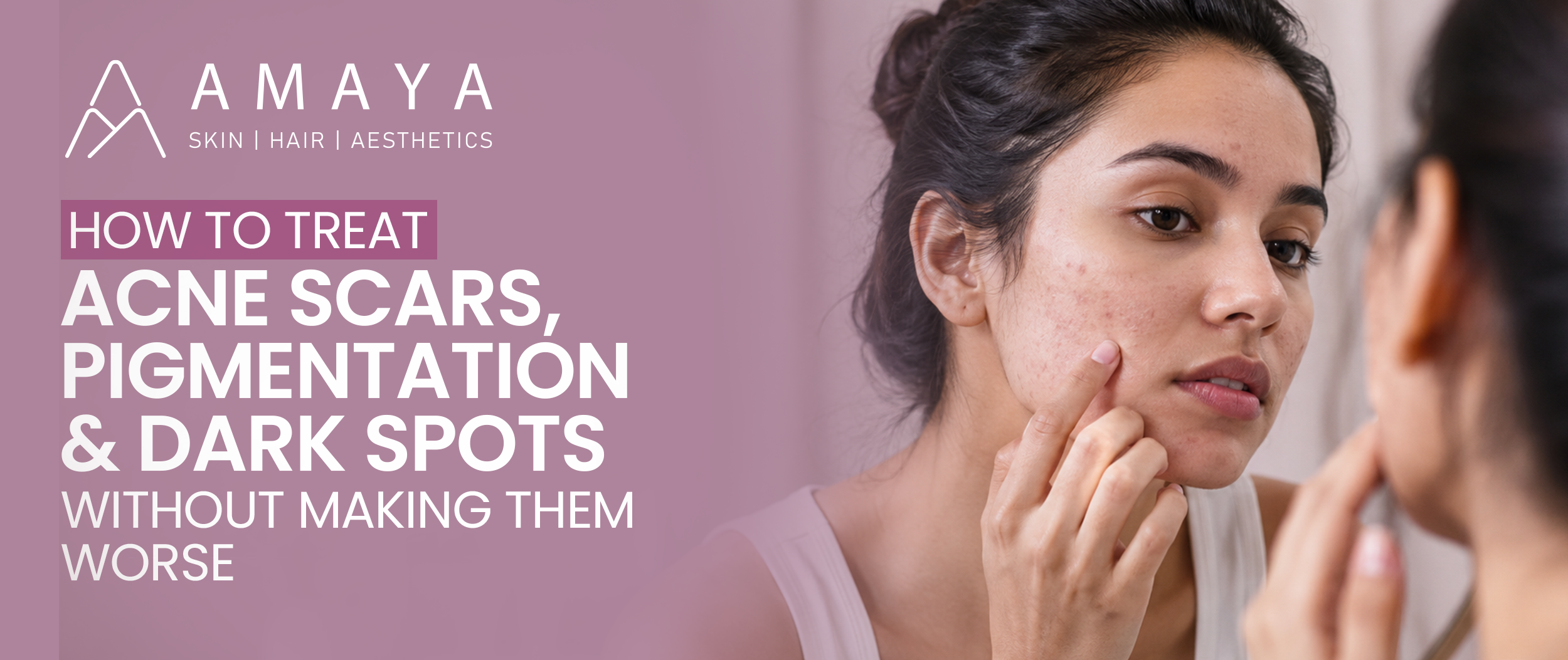
- Post-inflammatory pigmentation— discoloration after injuries like acne or cuts.
- Melasma— patchy brown or grey-brown areas, often on the face.
- Sunspots (Age spots or solar lentigines)— flat brown spots from sun exposure.
Causes of Skin Pigmentation
- Sun Exposure
Sunlight is the biggest trigger for pigmentation. UV rays stimulate melanocytes to produce melanin as a defense mechanism, but over time this leads to darkening and uneven tone.
- Hormonal Changes
Pregnancy, birth control pills, and hormone therapy can trigger melanin production — especially in genetically predisposed individuals. This is often seen in melasma cases.
- Skin Trauma
Any skin injury — including acne, burns, cuts, or harsh cosmetic treatments — can lead to post-inflammatory hyperpigmentation (PIH). This is especially common in medium to darker skin tones.
- Genetics & Ethnicity
Some people naturally have more active melanocytes or skin prone to pigmentation. Ethnic groups with higher melanin levels may be more prone to PIH and melasma.
- Medications & Chemicals
Certain antibiotics, anti-inflammatory drugs, and chemotherapy agents can trigger pigmentation changes. Topical products with irritants can also cause inflammation and subsequent darkening.
- Aging
As skin ages, cumulative sun exposure and slower cell turnover result in sunspots and uneven tone.
Treatment Options
Pigmentation treatment depends on type, severity, and skin type. A personalized approach by a skin specialist often gives the best results.
- Topical Treatments
Prescription Creams
- Hydroquinone— often considered a gold standard for lightening dark marks.
- Retinoids— boost skin cell turnover and fade pigmentation.
- Azelaic Acid— effective and gentle, especially for melasma.
- Vitamin C— antioxidant that lightens pigmentation and brightens skin.
These are usually prescribed in combinations to maximize results.
- Chemical Peels
Chemical peels use mild acids like glycolic or salicylic acid to remove the outermost pigmented layer of skin.
Benefits:
- Improves texture
- Reduces dark spots
- Boosts cell renewal
Caution:
- Must be done by a professional.
- May require multiple sessions.
- Laser and Light Therapies
Modern dermatology uses advanced technology to target excessive melanin beneath the skin’s surface.
Common options:
- Q-Switched Lasers
- Fractional Lasers
- IPL (Intense Pulsed Light)
These therapies break down pigmentation without damaging surrounding tissues.
Note: Results can be dramatic but require correct settings and expertise — especially for dark or sensitive skin types.
- Microneedling
Microneedling creates controlled micro-injuries to stimulate collagen formation and improve pigmentation over time.
Benefits:
- Can be combined with serums
- Improves texture + tone
Best performed by qualified professionals.
- Sunscreen: Your Best Defense
Regardless of treatment, daily broad-spectrum sunscreen is non-negotiable.
Why?
- Blocks UVA & UVB rays that trigger melanin production.
- Prevents treatment relapse.
- Protects against premature aging and spots.
Recommended: SPF 30 or higher, reapplied every 2–3 hours outdoors.
At-Home Care & Lifestyle Tips
✔ Use gentle, non-irritating cleansers
✔ Avoid picking at acne or scabs
✔ Wear hats and UPF clothing outdoors
✔ Avoid excessive heat and direct sun at peak hours
✔ Stay hydrated and eat antioxidant-rich foods
Good skincare is as important as clinical treatments.
How Long Do Treatments Take?
Results vary based on:
- Severity of pigmentation
- Skin type
- Treatment chosen
- Sun exposure habits
Generally:
Topical creams — visible improvements by 8–12 weeks
Chemical peels — visible after each session (multiple sessions recommended)
Laser therapies — improvements in 1–3 sessions, spaced weeks apart
Consistency is key. Pigmentation isn’t usually a one-session fix — but with the right plan, remarkable improvement is achievable.
When to See a Specialist
Always consult a qualified dermatologist or aesthetic specialist when:
- Pigmentation is persistent or worsening
- It’s affecting confidence or quality of life
- You’re unsure of your skin type or triggers
- Over-the-counter products aren’t helping
- You want faster, safer, long-term results
Proper diagnosis ensures the right treatment and reduces risk of side effects.
Why Choose a Specialist Dr. Shama Reddy at Amaya Clinics
Choosing the right doctor and clinic makes a significant difference in pigmentation treatment outcomes.
Here’s why Dr. Shama Reddy at Amaya Clinics stands out:
✔ Personalized Assessment
Every skin type is unique — especially pigmentation-prone skin. Dr. Shama Reddy conducts detailed evaluations before recommending a treatment plan.
✔ Advanced Technology & Evidence-Based Protocols
Amaya Clinics uses latest dermatology tools and clinically proven methods — from peels to laser therapies — ensuring safety and effectiveness.
✔ Customized Treatment Plans
Rather than a one-size-fits-all approach, plans are tailored to your:
- Skin type
- Pigmentation pattern
- Lifestyle and goals
✔ Focus on Long-Term Care
Pigmentation can recur if basic preventive care is ignored. Dr. Shama Reddy emphasizes:
- Sun protection
- Maintenance therapies
- Follow-up care
✔ Comfortable, Supportive Environment
Sensitive skin demands careful handling. At Amaya Clinics, patient comfort and education are top priorities.
Final Thoughts
Skin pigmentation — while common — can significantly impact confidence and appearance. The good news is that modern dermatology offers effective solutions for most pigmentation concerns.
Key takeaways:
- Pigmentation is caused by excess or uneven melanin.
- Sun exposure, hormones, genetics, and inflammation are major triggers.
- A combination of topical treatments, professional procedures, and sun protection yields the best results.
- Early expert intervention leads to better outcomes.
If pigmentation issues are affecting your confidence or skincare goals, scheduling a consultation with a specialist is the first step. For trusted, personalized care in aesthetic dermatology, Dr. Shama Reddy at Amaya Clinics offers expertise, advanced treatments, and a commitment to results.
Get expert care for skin pigmentation with Dr. Shama Reddy at Amaya Clinics – call +91 95757 96767 today to book your consultation and achieve clear, even-toned skin.

Leave a Reply